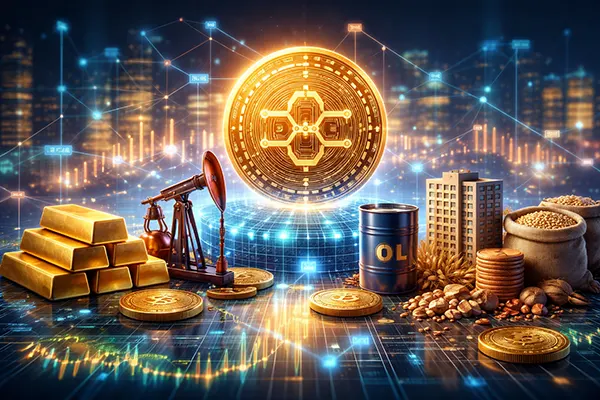
Digital Assets Backed by Real Commodities: A New Investment Model for Private Investors
Over the past decade financial markets have gradually moved towards digital ownership models. One of the most discussed developments by 2026 is the emergence of digital tokens linked to real-world assets such as gold, energy resources, property, and industrial commodities. These instruments combine traditional asset backing with blockchain-based infrastructure, allowing private investors to gain exposure to tangible resources through fractional digital ownership. For individuals who previously could not access commodity markets directly, this model represents a structural change in how investment portfolios can be built.
What Are Tokenised Assets Linked to Physical Commodities
Tokenised assets represent digital units issued on a blockchain that correspond to ownership rights or financial exposure to a specific real-world asset. In many cases, each token is backed by a measurable quantity of a commodity held in custody. For example, a gold-backed token may represent one gram or one ounce of physical gold stored in a vault. Investors purchase the token rather than the metal itself, while the issuing organisation maintains reserves to support the value.
By 2026, tokenisation models have expanded beyond precious metals. Projects linked to energy reserves, agricultural goods, industrial metals, and real estate have appeared across regulated digital asset markets. The core idea is to convert traditionally illiquid assets into divisible digital units that can be transferred quickly between investors while maintaining a connection to a physical asset.
Unlike purely speculative cryptocurrencies, commodity-backed tokens attempt to stabilise value through real-world backing. The price generally follows the market price of the underlying asset, although it may fluctuate depending on liquidity, trust in the issuer, and trading conditions.
How the Infrastructure Behind These Assets Works
The technical foundation of tokenised commodities relies on blockchain networks capable of recording ownership transfers in a transparent ledger. Each token transaction is stored on-chain, making it possible to track the circulation of the asset and verify the number of tokens in existence.
Behind the digital layer there is usually a custodian responsible for holding the physical asset. Independent audits or reserve reports are commonly used to confirm that the amount of commodities stored matches the number of tokens issued. In regulated jurisdictions this process may involve financial supervision authorities and third-party auditors.
Smart contracts are often used to automate aspects of the system. They can control token issuance, redemption mechanisms, or investor rights. For example, some gold-backed tokens allow investors to exchange a certain quantity of tokens for physical delivery once a minimum threshold is reached.
Potential Advantages for Private Investors
For many private investors the primary attraction of tokenised commodity assets is accessibility. Traditional commodity markets often require large contract sizes, specialised brokerage accounts, or complex financial instruments. Digital tokens reduce these barriers by allowing fractional ownership. An investor may gain exposure to gold, energy, or agricultural products with relatively small capital.
Another important factor is liquidity. Commodity ownership in its physical form can be difficult to sell quickly, especially when dealing with assets such as property or stored raw materials. Tokenised assets can be traded digitally, enabling faster entry and exit compared with traditional commodity ownership structures.
Portfolio diversification is also a relevant advantage. Commodities historically behave differently from equities or bonds, particularly during periods of inflation or geopolitical tension. Digital access to commodity exposure allows private investors to build broader portfolios without directly storing or managing physical resources.
Examples of Commodity-Backed Digital Assets in 2026
Gold-backed tokens remain one of the most established categories. Several financial institutions and fintech companies issue tokens supported by vaulted gold reserves, allowing investors to track the international gold price through digital ownership units.
Energy-linked tokens have also developed in recent years. Some projects represent exposure to electricity production, oil reserves, or renewable energy infrastructure. These tokens attempt to connect digital markets with real-world energy supply chains.
Real estate tokenisation represents another growing segment. Instead of purchasing entire properties, investors can buy fractional tokens representing a share of rental income or property value. While the regulatory framework varies by jurisdiction, several pilot projects in Europe and Asia have demonstrated how property ownership can be partially digitised.

Risks and Regulatory Challenges Investors Must Understand
Despite the technological innovation, tokenised commodities carry risks that private investors must evaluate carefully. One of the central concerns involves verification of asset backing. If the issuer does not maintain sufficient reserves or fails to provide transparent audits, the value of the token may diverge from the underlying asset.
Regulatory uncertainty also plays an important role. Different countries classify tokenised assets differently — some treat them as securities, while others regulate them under commodity or digital asset frameworks. Investors must understand which legal protections apply before allocating capital.
Market liquidity is another factor. Although tokenisation aims to improve tradability, some digital commodity markets remain relatively small. Limited trading volume can lead to price volatility or difficulty selling positions during periods of market stress.
How Private Investors Can Evaluate These Opportunities
Investors should begin by analysing the credibility of the issuing organisation. Transparent reserve reporting, third-party audits, and clear custody arrangements are critical indicators of reliability. Without verifiable backing, a tokenised commodity instrument may behave more like a speculative asset than a commodity investment.
It is also advisable to review regulatory compliance. Projects operating under recognised financial oversight tend to provide stronger investor protection mechanisms. Documentation explaining how assets are stored, insured, and audited should be publicly available.
Finally, private investors should treat tokenised commodities as one component within a diversified portfolio rather than a single investment strategy. While the model offers interesting possibilities for fractional commodity exposure, its long-term performance will depend on regulatory development, market maturity, and the stability of the underlying assets.